NVIDIA Stock Under Pressure: Can the AI Chip Giant Regain Investor Confidence Amid CEO Controversy?
Nvidia hasn't had a stretch like this in years. Its shares just fell for six straight weeks, the longest losing run since 2012, and co-founder Jensen Huang stepped down as chief executive on November 12.
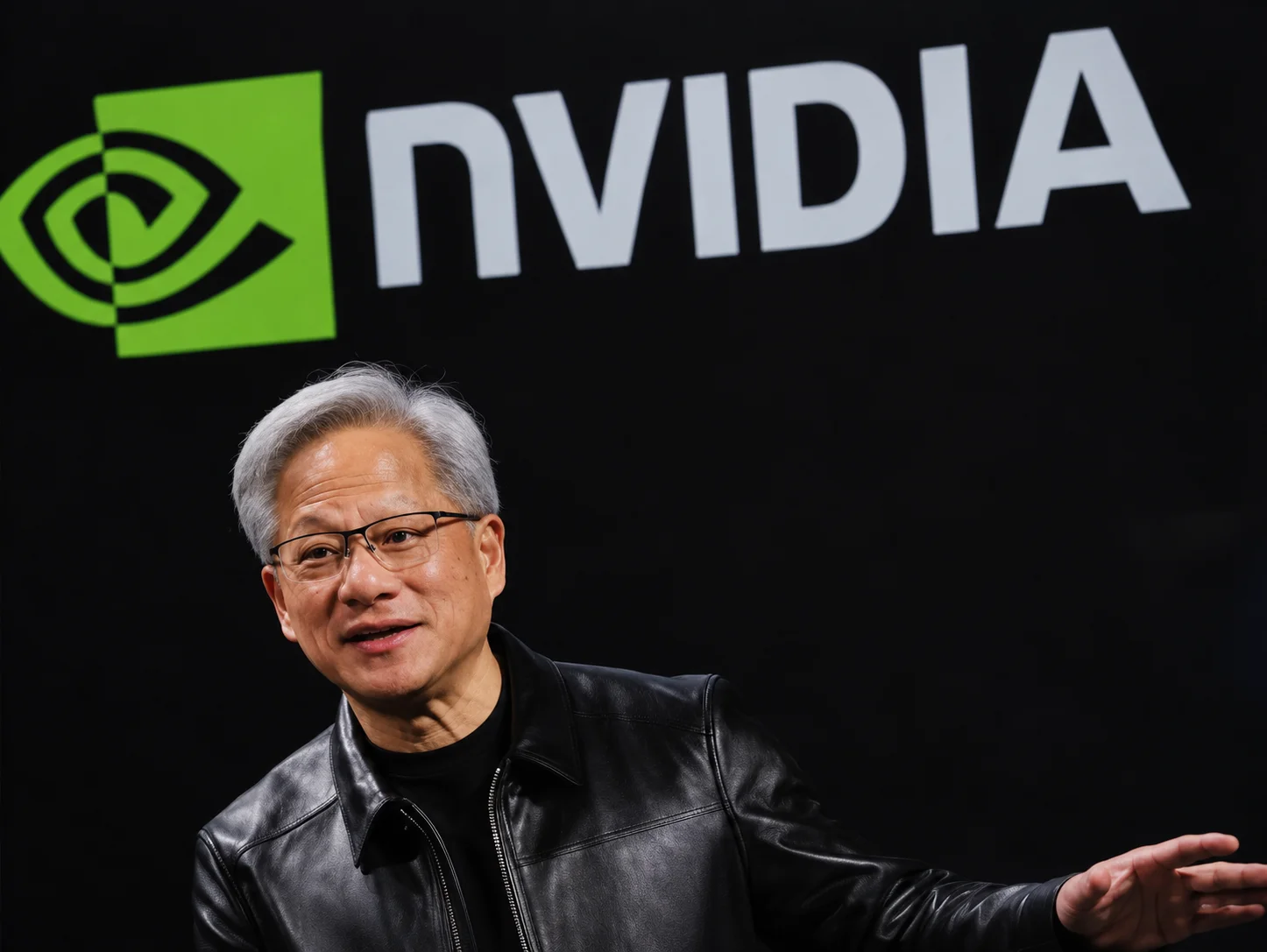
Today, after U.S. markets close, the company reports earnings for the first time without him. This guide covers the latest Nvidia news, what's still unproven, and what investors can sensibly watch. Figures reflect reporting through November 17, 2026.
Why Is NVIDIA Stock Facing Investor Uncertainty?
Nvidia stock has lost about 30% of its value since early October, which means Nvidia market capitalization is down roughly $1.7 trillion (November 13, 2026). Three things landed at once: a leadership scandal, a crowded investor trade, and an Nvidia CEO exit days before earnings. Any one is manageable. Together they shook confidence.
Here's the sequence, based on published reports. On October 29, stories surfaced about Jensen Huang's close relationship with a business executive whom U.S. agencies reportedly suspect of links to Chinese intelligence. On November 9, the board opened an internal investigation, saying it had no reason to believe national security or company secrets were compromised. Huang admitted infidelity and denied compromising Nvidia's security. A second relationship, with an employee, was reported soon after.
Worth remembering: These are reports and allegations, not court findings. Markets rarely wait for facts to settle, though. They sell uncertainty first and ask questions later, which is what happened to Nvidia stock: it fell 4.3% on November 9 and another 5.5% on November 10. Almost every piece of Nvidia news since October 29 has added pressure.
How CEO Controversy Could Impact NVIDIA's Business and Market Reputation
Jensen Huang led Nvidia for 33 years. He was its public face with customers, suppliers and governments, so when a founder leaves in a hurry, shares tend to open sharply lower. They did: down more than 13% on the day of the announcement. With Nvidia market capitalization this large, every leadership headline gets amplified.
Leadership continuity
CFO Colette Kress is interim CEO and keeps her finance role. Former Synopsys chief Harvey Jones was named Nvidia's first board chair, and the board will consider internal and external candidates. Bernstein's Stacy Rasgon cut his rating but called Kress's appointment a positive. A steady finance chief is a calming pick. Still, "interim" means temporary, and choosing the next Nvidia CEO will take time. Investors dislike open ended questions.
Legal and political scrutiny
Reports on November 9 said a shareholder class action had been filed and a U.S. senator wanted a probe. Public reporting doesn't show either matter resolved.
Reputation with customers
Buyers choose Nvidia hardware for performance and software, not for a chief executive's biography. But big customers also want stable roadmaps and firm supply commitments, and a leadership gap can cloud both. That's the real reputational risk. It's about confidence in execution, not personal headlines. Watch the Nvidia news for customer commentary, because that's where real damage would show up first.
NVIDIA's AI Chip Dominance: Is Competition Becoming a Serious Threat?
Nvidia holds roughly 80% of the AI accelerator market, backed by $193.7 billion in data center revenue in fiscal 2026. Its share peaked near 87% in 2024 and has slipped slowly since. So yes, competition is real. It's also gradual, and that doesn't automatically hurt Nvidia stock in the near term.
Google's eighth generation TPUs target training and inference, and Anthropic runs a mix of Google TPUs, Amazon's Trainium chips and Nvidia GPUs. AMD holds an estimated 5% to 7% share. In China, listed GPU makers Moore Threads, MetaX and Cambricon jumped nearly 10% on November 13 as Nvidia wobbled. That's Nvidia news rivals welcome.
My read: the Jensen Huang story hands rivals a headline, not a product. Any fair Nvidia stock forecast has to weigh them both. Customers can't swap out a CUDA based AI stack overnight. But a distracted Nvidia gives challengers time, and time is what challengers need.
Comparative Analysis: Bullish Fundamental Drivers vs. Bearish Governance & Market Headwinds
The table below sets the two sides next to each other. Even after the slide, Nvidia market capitalization still sits near $3.9 trillion, so both columns carry real weight.
| Side | Core Catalyst or Risk Factor | Impact on Investor Sentiment | Time Horizon of Effect | Key Signals to Watch |
|---|---|---|---|---|
| Bullish | Data center demand: revenue expected near $109B, up 91% | Strongly positive if the beat holds | Next 1 to 2 quarters | Results versus $108B guidance; next quarter outlook |
| Bullish | Product cycle: Vera Rubin ramp and CUDA ecosystem | Moderately positive | 1 to 3 years | Rubin share of data center sales (guided near 20%); customer commitments |
| Bullish | Reset valuation: shares about 30% below the October peak | Supportive, but no guarantee | 6 to 12 months | Analyst rating changes; fund flows |
| Bearish | Leadership gap: interim Nvidia CEO, search underway | Strongly negative near term | Months, until a permanent CEO is named | Successor announcement; senior departures |
| Bearish | Governance and legal scrutiny: board probe, lawsuit, Senate interest | Negative and hard to size | 6 to 24 months | Court filings; board disclosures; congressional letters |
| Bearish | Competition from TPUs, Trainium, AMD and Chinese GPUs | Gradual pressure on share and margins | 1 to 5 years | Hyperscaler spending split; gross margin versus the roughly 74% guided |
What Are the Key Factors Driving NVIDIA Stock Price Movements?
Over the past two weeks, headlines moved Nvidia stock more than fundamentals did. Every Nvidia stock forecast depends first on how three forces play out.
Earnings and guidance. Nvidia has beaten the top of its own revenue range 14 quarters in a row. Last quarter's sales came in near $96 billion, more than $3 billion above that range.
Crowded positioning. Many funds own the same AI winners, so selling can feed on itself. One report called Nvidia the market's most crowded trade.
Leadership news flow. Each new piece of Nvidia news moved the price. Nvidia market capitalization has now slipped behind Apple's, after the roughly $1.7 trillion drop since early October.
Until a permanent Nvidia CEO is named, expect headline risk to keep competing with earnings for the market's attention.
Can NVIDIA Regain Investor Confidence Through Innovation and Business Growth?
Probably, but in stages. Confidence usually returns when results are strong, leadership is settled and governance questions close. Rebuilding Nvidia market capitalization starts with the first of those, and Nvidia controls it today. Today's report is Nvidia's first since Jensen Huang left.
Wall Street expects third quarter revenue near $109 billion, up 91% from a year earlier, with adjusted earnings of $2.47 per share. Nvidia itself guided to $108 billion, plus or minus 2%.
On products, the Vera Rubin platform was guided to about 20% of data center revenue this quarter. A strong ramp would show that engineering and manufacturing didn't skip a beat during the turmoil. Good Nvidia news on products carries extra weight right now, and it would improve any Nvidia stock forecast built on growth.
The second piece is a timetable. Investors don't need a name tomorrow, but they do want to know how the search for the next Nvidia CEO will run and who's in charge meanwhile. The third is clarity on the board's investigation. If it confirms the board's early view that nothing was compromised, the national security worry fades. Any other outcome would widen it.
NVIDIA vs AMD and Other AI Chip Competitors: Who Has the Advantage?
Nvidia has the advantage today, mostly through software and scale. A sound Nvidia stock forecast starts with that lead. AMD, Google and Amazon have momentum in specific niches. Inference, the work of running trained models, is on track to be two thirds of AI chip spending, and that's where rivals compete hardest on cost.
Nvidia
Its edge is the full package: chips, networking and the CUDA software that developers already know. Switching costs are high, which protects pricing.
AMD
AMD's MI400 series carries 432 GB of HBM4 memory. Its share is small, so growth would come from winning a handful of large customers.
Custom chips and Chinese rivals
Google's TPUs and Amazon's Trainium serve their own clouds first and outside customers second. Chinese chipmakers have grown under U.S. export controls. One June analysis argued the market is big enough for more than one winner.
What Does the Future Hold for NVIDIA Stock and Its Investors?
Any Nvidia stock forecast right now carries unusual uncertainty. Average analyst price targets run from roughly $268 to $310, depending on the tracker, well above a share price near $160. But targets are being cut. Bernstein halved its target to $200, D.A. Davidson lowered its own to $200 while keeping a Buy, and Bank of America kept a Buy with a $280 target.
A practical way to read any Nvidia stock forecast is by scenario, and a recovery in Nvidia market capitalization fits only the first one:
- Constructive: strong results and a credible CEO plan shift attention back to growth.
- Choppy: earnings hold up, but the search drags and headlines keep coming.
- Difficult: new reports or weak guidance extend the slide.
I wouldn't bet on one path. Watch the earnings call, the Nvidia CEO decision and the competitive mix, in that order, and keep an eye on Nvidia news about the search. This article is for information only and isn't investment advice.
Frequently Asked Questions About NVIDIA Stock
1. Why did Nvidia stock fall in October and November 2026?
Reports about Jensen Huang's personal conduct, and a possible national security angle, arrived while the AI trade was already crowded. Shares lost about 30% since early October and fell six weeks running. The board says it had no reason to believe secrets were compromised.
2. Who is the Nvidia CEO right now?
Colette Kress, CFO since 2013, is interim CEO while the board searches for a permanent leader. Jensen Huang resigned as CEO, president and board member on November 12.
3. What is the current Nvidia stock forecast from Wall Street?
Most analysts stay positive: 57 of 62 rated the shares Buy or Strong Buy as of November 12. Targets are being trimmed, though, and today's results could move them fast.
4. Where does Nvidia market capitalization stand now?
Near $3.9 trillion, roughly $2 trillion below the October peak.
5. Is competition a real threat to Nvidia?
It's growing but slowly. Nvidia holds about 80% of AI accelerators versus AMD's 5% to 7%, though Google and Amazon chips are gaining ground.