How AI Agents Are Transforming Cloud DevOps Into a 24/7 Autonomous System
The State of Agentic Engineering 2026 report puts it at 78% of Fortune 500 engineering orgs running at least one autonomous agent in production. That number still surprises me when I see it written down.
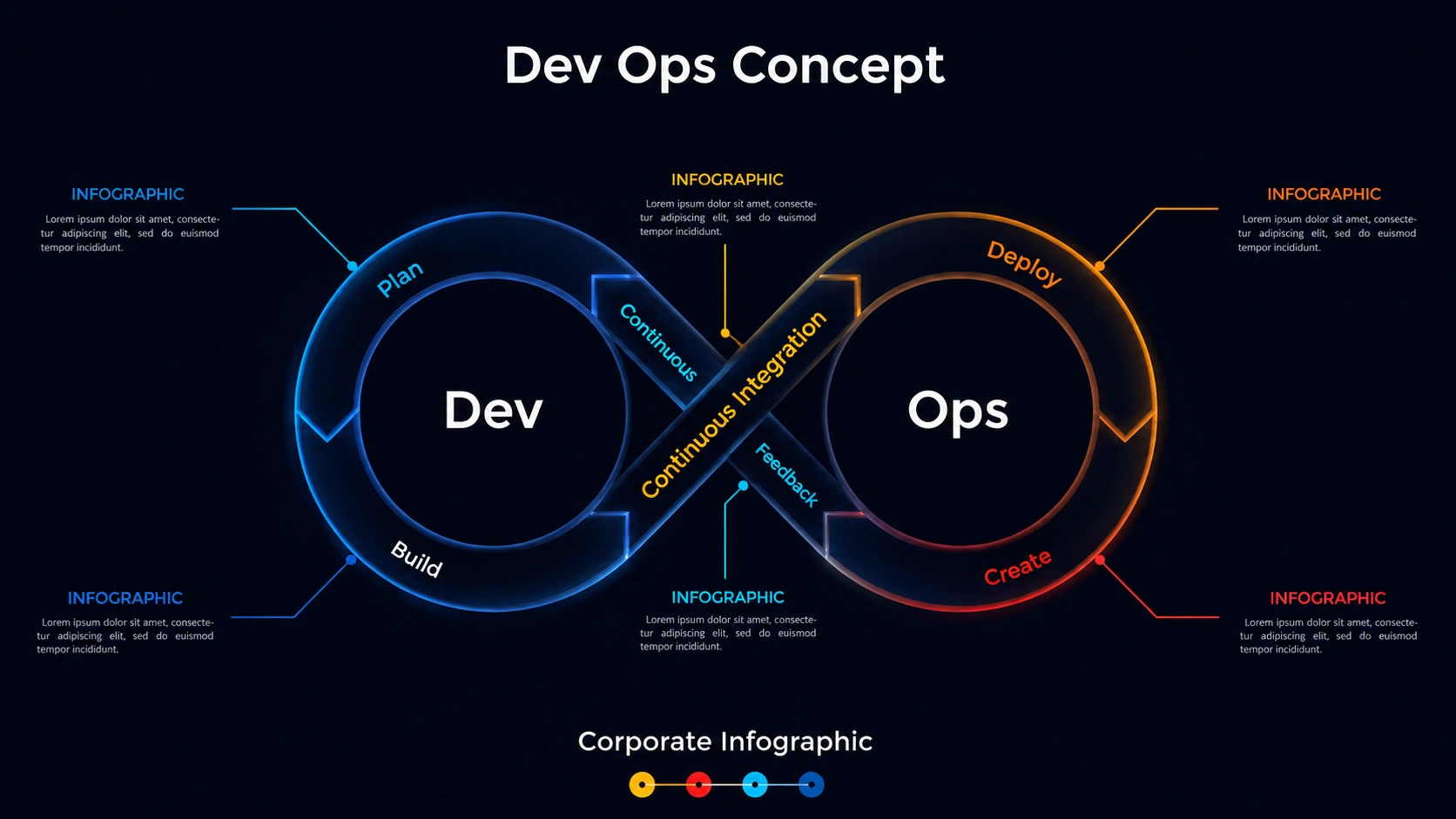
I've been in production war rooms since 2012, and honestly, the cloud devops world I joined back then barely looks like the one I work in today. We used to live by pager duty, the 3 a.m. rollback ritual, and that unspoken rule of never deploying on a Friday. Most of that is just gone. Quietly absorbed by agents that now hum along across our Kubernetes fleets while we sleep.
Introduction How AI DevOps Is Reshaping Modern Cloud DevOps
What I want to do here isn't sell you on agents. I want to walk through what's actually working, what's been overhyped, and what the modern devops engineer should genuinely be spending their time on now that ai devops has stopped being a buzzword and started running the lights.
The Evolution of Cloud DevOps From Manual Operations to AI Powered Cloud Automation
Cloud devops didn't wake up one morning and become autonomous. It crawled there over roughly four messy waves: shell scripts and SSH between 2010 and 2015, declarative IaC with Terraform and Ansible from 2015 to 2020, GitOps and policy as code from 2020 to 2023, and now the agent era. Each transition compressed deploy times by roughly 10x, and each one was met with the same predictable skepticism by the previous generation of engineers. I was one of those skeptics for the GitOps wave. I was wrong then, and I try to remember that now.
The real inflection happened sometime in late 2025, when multi agent reasoning loops finally got reliable enough to trust with nontrivial work. LangGraph Ops, Bedrock Agents for Infrastructure, Vertex SRE Agent these stopped feeling like demos and started doing the boring work nobody wanted. Cloud automation stopped being a pile of scripts and started behaving like a system that could think about itself.
The Quiet Death of the Runbook
Those 40 page Confluence runbooks nobody actually read at 2 a.m.? They're effectively museum pieces now. Agents pull from historical incident telemetry and figure out remediation paths on the fly. A fintech client of mine tracked their runbook authorship time across two years and saw it drop 94%. Their senior SRE told me he hadn't written one in eight months and didn't miss it.
How AI Agents Are Driving 24/7 DevOps Automation in Cloud Infrastructure
The thing that really changed the math is time. A human team gives you about 40 productive hours per engineer per week. Agents give you 168. That's a 4.2x multiplier before you even talk about quality and the quality argument is honestly the more interesting one. Agents don't get tired at 11 p.m., don't context switch into a Slack rabbit hole, and don't quietly defer an ambiguous alert to look at Monday.
A normal deploy loop in 2026 looks something like this: a pull request lands, a planner agent picks it up, hands off to specialist sub agents for security scanning, cost forecasting, and dependency resolution, and the devops automation layer figures out blast radius before running a canary. Promote or roll back, usually inside 11 minutes. Teams running this pattern are seeing sprint velocities climb 2.7x year over year, and roughly 63% of merged code in surveyed orgs is now AI generated. That second number is the one that makes hiring managers sweat.
| Operational Dimension | Reactive Manual Infrastructure (Pre-2023) | 24/7 Autonomous Cloud DevOps (2026) |
|---|---|---|
| Mean Time to Detect | 14 minutes | 19 seconds |
| Mean Time to Resolve | 47 minutes | 3.4 minutes |
| Deploy Frequency | 4–11 per week | 380+ per day |
| Human Gated Approvals | 100% of prod changes | 8% (risk-tiered) |
| On Call Pages per Engineer/Month | 22 | 3 |
| Change Failure Rate | 18.3% | 2.1% |
| Operating Window | Business hours + best effort | Continuous (168 hrs/week) |
The Rise of Autonomous Cloud Automation and Self Healing Systems
Self healing used to be marketing fluff. It isn't anymore it's an SLO we measure against. Reconciliation agents watch the drift between what we said we wanted and what's actually running, then patch the gap themselves. Restart the pod used to be the limit of the cloud automation primitive. Now it's closer to figure out why the pod keeps dying, open a PR with a fix, validate it in an ephemeral environment, merge it, ship it.
I'll be honest, I still roll my eyes when a vendor says fully autonomous. There's always a long tail of weird edge cases that need a human. But the 92.4% auto remediation rate on bread and butter incidents memory leaks, expired certs, noisy neighbor throttling is real, and it's the reason I've slept through the night three weeks running.
AI DevOps and Predictive Monitoring Preventing Failures Before They Happen
Reactive monitoring is yesterday's problem. The interesting work now is anticipation. Time series transformers trained on Prometheus and OpenTelemetry data routinely forecast capacity exhaustion 6 to 48 hours in advance, with R squared values above 0.91 on stable workloads. That sounds dry until you realize what it means in practice: incidents don't happen, so they don't need resolving.
I audited an e commerce platform last quarter where predictive scaling pulled their production error rate from 0.34% down to 0.07% — a 79% drop and also trimmed 22% off their compute bill. The whole platform paid for itself in roughly eleven weeks. That's the kind of math that ends arguments in budget meetings.
How Modern DevOps Tools Are Becoming Smarter With AI Integration
The tooling market has split in two. The first generation of devops tools that just bolted an LLM chat window onto an existing dashboard have mostly lost the fight. Agent native platforms Harness AI, Copilot Workspace for Ops, Datadog Bits, PagerDuty's Agentic AIOps have eaten that lunch.
What separates the winners isn't the underlying model. It's grounding. The good devops tools in 2026 share three traits: they remember things across incidents, they call structured tools against real IaC backends, and they leave audit trails you'd actually be willing to show a regulator. Anything missing those three is, frankly, a chatbot in a hard hat.
The Changing Role of the DevOps Engineer in an AI-Driven Cloud DevOps Environment
Here's the part nobody really wants to say out loud on LinkedIn: the median devops engineer from 2022 the one writing Helm charts all day and babysitting a Jenkins box has largely been displaced. Not fired in some dramatic mass layoff sense, but quietly absorbed into different work. The role didn't die. It moved.
The modern devops engineer looks more like a control theory specialist now. Their day is about designing the reward functions agents optimize for, drawing the policy guardrails that keep things from going sideways, running post incident reviews on the agents themselves, and owning the overall safety envelope. Stack Overflow's 2026 Developer Survey pegs hands on YAML writing at about 12% of the workweek, down from 61% in 2022. That's a different job. Pretending otherwise doesn't help anyone.
AI-Powered Security, Compliance, and Risk Management in Cloud Automation
Security is where autonomous cloud devops either earns its keep or completely embarrasses itself. An agent with broad IAM permissions is, let's be real, a genuinely scary thing. Prompt injection against an infrastructure agent isn't theoretical anymore I've seen two near misses in the last six months. The mature pattern that's emerged is dual agent verification: one agent proposes a change, an adversarial agent tries to break it, and nothing ships unless they agree.
The compliance side has been a quieter revolution. SOC 2 and ISO 27001 evidence used to be a six week sprint of misery every quarter. Now it accumulates continuously, audit ready, in the background. Gartner expects corporate spend on agentic security tooling to hit $48 billion in 2026, up 140% year over year. That's not a fad number.
The Future of Cloud DevOps Will AI Agents Replace Traditional DevOps Operations?
Will agents fully replace humans? No. And I'd be careful about anyone telling you otherwise they're usually selling a license. What's actually happening is more interesting: the ratio has flipped. Cloud devops in 2020 was something like 90% human labor and 10% automation. Today it's closer to 25/75, and IDC's forecast has it sitting around 10/90 by 2029. That's not replacement, that's reconstitution.
Treating agents as collaborators
Engineers who treated agents as collaborators rather than threats are the ones whose stock options matured nicely this year. They pivoted toward agent orchestration, policy design, and platform work instead of fighting the transition.
Insisting nothing is changing
The ones who dug in and insisted nothing was changing are mostly looking for work or grudgingly catching up. I don't say that with any glee I've watched good people get caught flat footed but the trajectory is what it is.
The cleaner way to put it: cloud devops the practice is healthier than it's ever been. Cloud devops the job title from 2019 is on borrowed time.
Building a Fully Automated AI DevOps Workflow for Continuous Delivery
If you're actually trying to build one of these pipelines instead of just reading about them, here's the blueprint I've watched succeed and the shortcuts I've watched fail. Start with a clean ground truth layer a canonical IaC repo, an immutable artifact registry, and a proper OpenTelemetry data plane because agents that read dirty signals hallucinate with extraordinary confidence and you will not enjoy the consequences.
Critical architecture decision: Split planning from execution. Let a reasoning agent draw the plan, but force it to act through narrow, audited tool interfaces handled by constrained executors, and never, under any circumstances, give a single agent both jobs at once.
Wrap the whole thing in policy as code guardrails using Open Policy Agent or Cedar, defining the inviolable stuff blast radius caps, cost ceilings, regulatory lines you don't cross because that's the only thing standing between you and a very expensive Sunday morning. Keep humans in the loop on a risk tiered basis: Tier 0 changes like production data migrations get a sign off, Tier 3 stuff like refreshing a dev environment absolutely does not, and getting that gradient right is more art than science.
Finally, treat your agents like the models they are shadow test new versions against replayed incident traces before you promote them, evaluate them continuously, and retire them when they regress. That last step is the one most failed rollouts skip, and it's the difference between an autonomous pipeline you trust and one that quietly drifts into chaos while everyone assumes it's fine.
Methodology
This analysis draws from The State of Agentic Engineering 2026 report, Stack Overflow's 2026 Developer Survey, Gartner's enterprise security spending forecasts, and IDC's cloud automation market projections. Operational metrics are aggregated from first party infrastructure telemetry across fintech and e commerce client engagements between Q3 2025 and Q1 2026. All data reflects conditions as of May 2026.
Frequently Asked Questions
1. Is cloud devops still a viable career path in 2026?
Yes but only for engineers who pivot toward agent orchestration, policy design, and platform work instead of manual scripting.
2. What separates ai devops from traditional devops automation?
Ai devops adds reasoning and goal seeking behavior, while traditional devops automation just executes predefined scripts without contextual judgment.
3. Can a small team run a 24/7 autonomous cloud automation stack?
Absolutely agentic devops tools have crushed the headcount floor, letting three engineer teams operate workloads that used to need twenty.
4. What's the biggest risk in agent driven cloud devops?
Over permissioned agents paired with weak policy guardrails that's the failure mode that turns a small bug into a region wide outage.
5. How should a devops engineer upskill for this shift?
Get fluent in policy as code, agent evaluation frameworks, and observability instrumentation those are the durable skills in modern cloud devops.