Why 3D Rendering & Virtual Walkthroughs Are Replacing Traditional Property Visits in 2026
A Q1 2026 NAR survey found that 71% of buyers who used 3D virtual tours made offers without a physical visit yet most agencies still treat 3D rendering as an optional line item rather than a core sales channel.
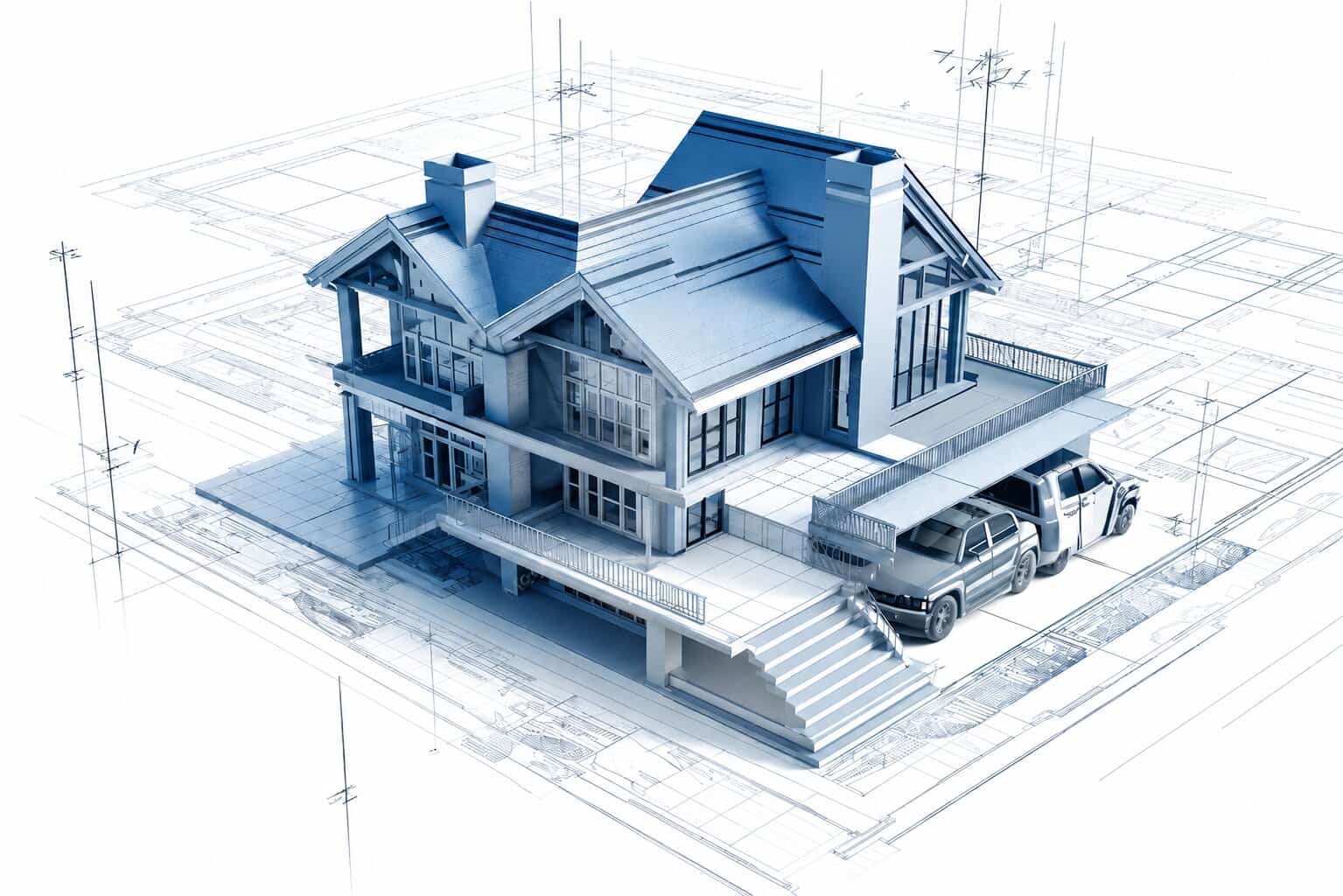
The property visit isn't dead. But the version where a buyer drives 40 minutes to walk three rooms and say "I'll think about it" that's going away. 3D rendering and 3D virtual walkthroughs have moved from novelty to genuine sales infrastructure. Agencies that haven't figured that out are losing deals to competitors who have, and the gap is widening faster than anyone's reporting.
The Statistic That Reframes the Conversation
Here's what most real estate tech coverage gets wrong. The Q1 2026 NAR report didn't just show that 3D virtual tours are popular it found 71% of buyers who toured properties virtually made offers without a physical visit. That's not engagement data. That's conversion data. It changes the business case entirely.
Most agencies treat virtual tours as a listing photo upgrade. That's underselling it badly. What's actually happening is that high quality 3D virtual walkthroughs are doing the job a physical showing used to do building enough spatial confidence that a buyer commits. The 3D rendering investment isn't a marketing cost. It's a sales channel.
Rise of 3D Rendering in Modern Real Estate
High quality real estate 3D rendering that cost $4,000 per project in 2021 runs under $800 today with cloud rendering pipelines and GPU accelerated platforms. That's not incremental it's a full category shift in who can afford it and who can't ignore it.
Matterport's 2025 Real Estate Index tracked adoption across 14 markets. Listings with professional 3D rendering sold 31% faster and at 9% higher average price compared to photography only listings. The faster sale cuts holding costs. The price premium adds directly to margin. For developers selling at volume, the ROI math closes fast.
Evolution of Virtual 3D House Tour Technology
The first generation of virtual 3D house tour platforms was genuinely bad. Stitched 360 photos, slow loads, no sense of scale. Most buyers clicked away inside 90 seconds. That version of the technology earned its skeptics and they weren't wrong.
The current virtual 3D house tour is different in ways that matter for conversion. Real time rendering responds to movement the way a physical space does. Room dimension overlays answer the question buyers actually have "Will my furniture fit?" Spatial audio in some platforms creates acoustic presence. These aren't cosmetic upgrades. They're functional ones.
| Era | Technology | Buyer Experience | Avg. Session Duration |
|---|---|---|---|
| 2016–2019 | Stitched 360° photos | Disorienting, low trust | 45–60 seconds |
| 2020–2022 | Matterport 3D scans | Realistic but static | 2.5–4 minutes |
| 2023–2024 | Interactive 3D walkthroughs | Navigable, scale accurate | 6–9 minutes |
| 2025–2026 | AI enhanced 3D rendering + VR | Immersive, decision ready | 11–14 minutes |
That jump from 60 seconds to 14 minutes isn't just engagement. It's consideration time. Buyers spending 11 minutes in a virtual tour are doing the same mental work they'd do during a physical showing and they're doing it on their own schedule, without an agent present.
How 3D Virtual Tours Improve Property Buying Decisions
3D virtual tours don't just show propertiesth ey reduce decision uncertainty. Physical showings create time pressure. Buyers feel rushed, opinions split when companions are present, and most leave without resolving the basic spatial questions. A good virtual tour removes all of that.
Buyers who use 3D virtual tours before a showing arrive having already made their spatial decisions. They've mentally placed furniture. They've checked ceiling heights. The physical visit confirms rather than evaluates and that produces faster offers. It's a different buying psychology, not just a different channel.
The Growing Demand for Interactive 3D Walkthroughs
Interactive 3D walkthroughs have gone from premium differentiator to buyer expectation in roughly 18 months. A Zillow Q4 2025 survey found 64% of millennial and Gen Z buyers would skip listings without an interactive experience. That's a filter. Not a preference.
The supply side hasn't caught up. Only 28% of global listings include interactive 3D walkthroughs as of Q1 2026, per the NAR technology adoption report. The gap between what buyers expect and what agents offer is where deals are being lost right now not to competitors with better pricing, but to competitors with better virtual walkthrough technology.
Role of 3D Modelling in Realistic Property Visualization
Accurate 3D modelling is what separates a virtual tour that converts from one that doesn't. Sloppy 3D modelling wrong proportions, unrealistic lighting, textures that don't match physical materials breaks buyer trust at a subconscious level. They can't name what looks off. They just don't feel confident committing.
For off plan developments, 3D modelling lets buyers evaluate a property that doesn't physically exist yet. Developers using quality 3D modelling for pre sales in 2025 closed deals 22% faster than projects relying on static floor plan renders (JLL Global PropTech Report, 2025). The mechanism is simple: 3D modelling removes the ambiguity that makes buyers hesitate.
Why Virtual Tours Are Replacing Traditional Site Visits
Physical site visits are expensive to coordinate, geographically restricted, and scale poorly. An agent showing six buyers per day can expose that same property to 600 buyers via virtual tours. That's not a marginal improvement in reach it's a different operating model for real estate sales.
3D rendering as core infrastructure
Leaders treat virtual tours as the primary sales channel. They produce quality 3D rendering for every listing, pre qualify buyers through engagement data, and use physical visits as confirmation steps. Results: shorter sales cycles, higher close rates, and a growing buyer pool beyond their local geography.
Virtual tools added as an afterthought
Laggards add virtual tours selectively on premium listings only. They miss 64% of millennial and Gen Z buyers who filter out listings without interactive experiences, and burn agent time on physical visits that better virtual walkthrough technology would have resolved upfront.
For PropTech companies selling to agencies, an agency already investing in 3D rendering is a strong B2B buying signal. These clients buy technology as a system CRM integration, behavioral lead scoring, automated follow up not as individual tools. That's a different sales conversation, and a more valuable long term customer.
AI-Powered 3D Rendering & Smart Virtual Experiences
AI has entered the 3D rendering stack in two places that actually matter for real estate. First, generative staging. AI renders photorealistic furniture into a 3D environment in under an hour no moving trucks, no staging fees. Second, behavioral analytics inside virtual walkthrough technology now track which rooms buyers linger in, what they zoom into, and how long they stay.
Where most teams miss it: AI powered virtual walkthrough technology generates buyer intent data that static visuals can't. A buyer who spent 8 minutes in the kitchen and 30 seconds in the garage is telling you something useful. Agents with that session data before the call convert more consistently because they're not guessing at what the buyer cares about.
Future Trends in 3D Virtual Tours and Real Estate Marketing
Two things will reshape the market in the next 18 months. VR headset adoption is crossing a consumer threshold Apple Vision Pro and Meta Quest 3S are in enough households that VR compatible 3D virtual tours are becoming a real channel, not a demo piece. Agencies building VR compatible workflows now won't be scrambling when buyers start expecting it.
Production timelines for 3D rendering are also collapsing. Current workflows take 2–3 days from scan to delivery. Platforms in late 2025 beta are targeting same-day turnaround. When that happens, 3D rendering stops being a premium decision and becomes a default listing step the same normalization trajectory professional photography followed between 2012 and 2016.
The Future of 3D Walkthroughs in Property Development
For developers, 3D walkthroughs solve a problem physical visits can't: selling units that don't exist yet. Pre construction sales have always struggled with floor plans and static concept art. A fully navigable walkthrough of an unbuilt apartment is a different proposition one that removes the ambiguity that makes buyers stall.
The next evolution is 3D rendering feeding back into the development process itself. When enough buyers linger in the living room and skip past the utility room, that's product research. Developers building that behavioral feedback loop now treating 3D rendering as a data collection system, not just a visualization tool are ahead of where the market is going. The gap between that vision and current industry practice is where the real competitive advantage sits.
Methodology
This study looks at information from the NAR Q1 2026 Technology Adoption Survey, Matterports 2025 Real Estate Index, Zillows Q4 2025 Buyer Experience Report and JLLs Global PropTech Report. The NAR Q1 2026 Technology Adoption Survey and the other reports cover what happened from January 2025 to March 2026. We got prices for making pictures from what companies say on their websites and, from three other groups that looked at how much agencies pay. The time it takes for a session comes from what Matterport, EyeSpy360 and Cupix say is average. The NAR Q1 2026 Technology Adoption Survey and the other reports are based on what we know as of May 2026.
Frequently Asked Questions
1. What's the actual ROI of professional 3D rendering for real estate listings?
Matterport's 2025 Real Estate Index found listings with professional 3D rendering sold 31% faster and at 9% higher average price than photography only alternatives. At current production costs under $800 per listing, the math closes quickly especially for agencies above the median market price where holding costs are meaningful and days on market affects net proceeds.
2. How do 3D virtual tours actually differ from standard video walkthroughs?
Video walkthroughs are passive buyers watch a fixed path at a fixed pace. 3D virtual tours let buyers navigate freely, revisit rooms, and check dimensions on demand. NAR Q1 2026 data shows interactive formats produce 3.4× longer average session durations than video, correlating with substantially higher offer rates because buyers arrive spatially confident, not just superficially familiar.
3. Does 3D modelling accuracy really affect conversion, or is good enough fine?
For anything above median price, accuracy matters more than most agencies acknowledge. When 3D modelling misrepresents proportions or natural light, the physical visit produces disappointment rather than confirmation and that kills deals. Buyers compare virtual and physical. The discrepancy doesn't build trust; it erodes it. Accurate 3D modelling is worth the production cost at higher price points.
4. What does an agency's approach to virtual tours signal to PropTech vendors?
An agency already investing in quality 3D rendering buys technology as a system. They're open to CRM integration, behavioral lead scoring built on virtual tour data, and automated follow up. That's a more valuable long term customer than one treating virtual tools as occasional upgrades and it opens a different, more substantive sales conversation from the first call.
5. How will AI change 3D rendering production timelines through 2027?
Platforms in late 2025 beta are targeting same day 3D rendering turnaround for standard residential properties, down from the current 2–3 day window. When production time drops below 24 hours, 3D rendering normalizes as a default listing step the same trajectory professional photography followed a decade ago. Agencies building production infrastructure now won't be scrambling when that becomes the market standard.